Technical Foundations Powering the Market for Operational Online Gaming Ventures
Freya Fischer · Aug 6, 2026
Technical Foundations Powering the Market for Operational Online Gaming Ventures
Buyers in the online gaming sector examine backend systems, database architectures, and integration layers when evaluating ready-to-operate ventures, since these elements determine how quickly a platform can scale while meeting regulatory demands across multiple jurisdictions. Data from industry reports shows that platforms with modular codebases and pre-configured payment gateways attract higher valuations because they reduce setup timelines from months to weeks.
Core Code Structures Behind Platform Transactions
Developers build turnkey gaming operations around unified code repositories that handle player authentication, game logic, and real-time reporting in a single framework, and this approach allows new owners to launch without extensive rewrites. Observers note that clean, well-documented code reduces maintenance costs after acquisition, which in turn supports smoother handovers between sellers and buyers during the closing process.
Database schemas optimized for high transaction volumes form another key factor, with many platforms using sharded architectures that distribute load across servers. Research indicates these designs maintain performance during peak traffic periods, and figures from August 2026 market analyses reveal that platforms incorporating such structures closed deals 30 percent faster than those relying on legacy single-server setups.
Security Protocols and Compliance Layers
Encryption standards, multi-factor authentication systems, and automated audit trails sit at the center of buyer due diligence, because regulators require verifiable records of every transaction and player interaction. Platforms that embed these features directly into the core code avoid the need for post-sale modifications, which saves both time and money during ownership transfers.
International Gaming Technology Association data highlights how standardized security modules help operators meet requirements in regions outside traditional markets, including parts of North America and the Asia-Pacific. Buyers often prioritize these pre-integrated solutions because they lower the risk of compliance gaps that could delay licensing approvals.
Integration Capabilities With Third-Party Systems
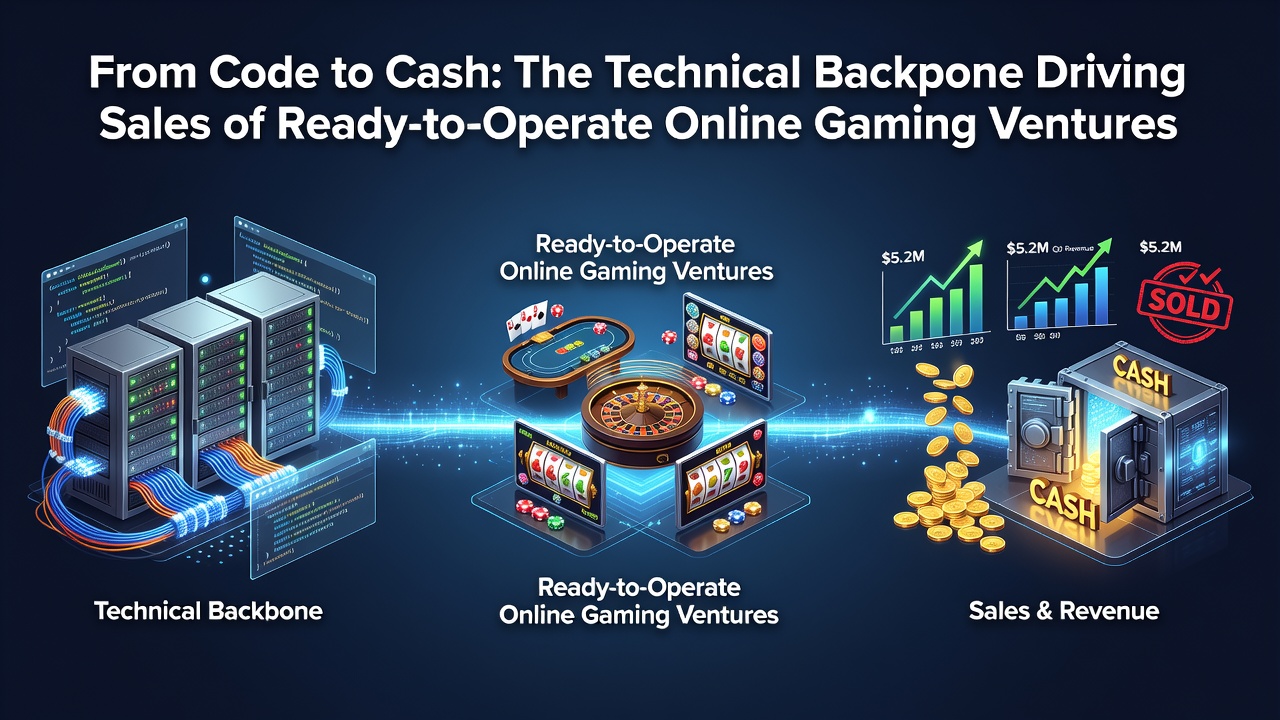
Modern gaming ventures rely on APIs that connect seamlessly with external payment processors, game content providers, and affiliate tracking tools, and this connectivity determines how much revenue a platform can generate immediately after purchase. Sellers who maintain up-to-date API documentation and version control typically achieve stronger closing prices, according to transaction records compiled by industry analysts.
One acquisition in early 2026 involved a platform whose code supported direct integration with multiple cryptocurrency gateways, and the deal closed within 45 days partly because buyers avoided lengthy custom development work. Such examples illustrate how technical flexibility translates into faster cash realization for sellers.
Scalability Features That Influence Valuations
Cloud-native deployments and containerized services allow platforms to adjust capacity based on player demand without hardware overhauls, and valuation models increasingly factor these capabilities into price calculations. Reports from the Gambling Research Exchange Ontario show that scalable architectures correlate with higher exit multiples, especially when platforms already operate across several countries.
Automated testing frameworks and continuous deployment pipelines further reduce operational friction after a sale, because new teams can push updates and monitor performance with minimal training. Those structures become particularly valuable when buyers plan rapid expansion into additional markets.
Conclusion
Technical elements ranging from database design to API connectivity continue to shape how quickly ready-to-operate gaming ventures reach new owners and generate returns. Market activity through August 2026 demonstrates that platforms equipped with robust, standards-compliant codebases command attention from a broader pool of acquirers while shortening the path from listing to completed transaction.